
Student Voice in Schools: A Practical Guide to Listening, Acting and Building Ownership
Create safe, meaningful ways for students to share what helps them learn—and show them what happens next.
Explore the guide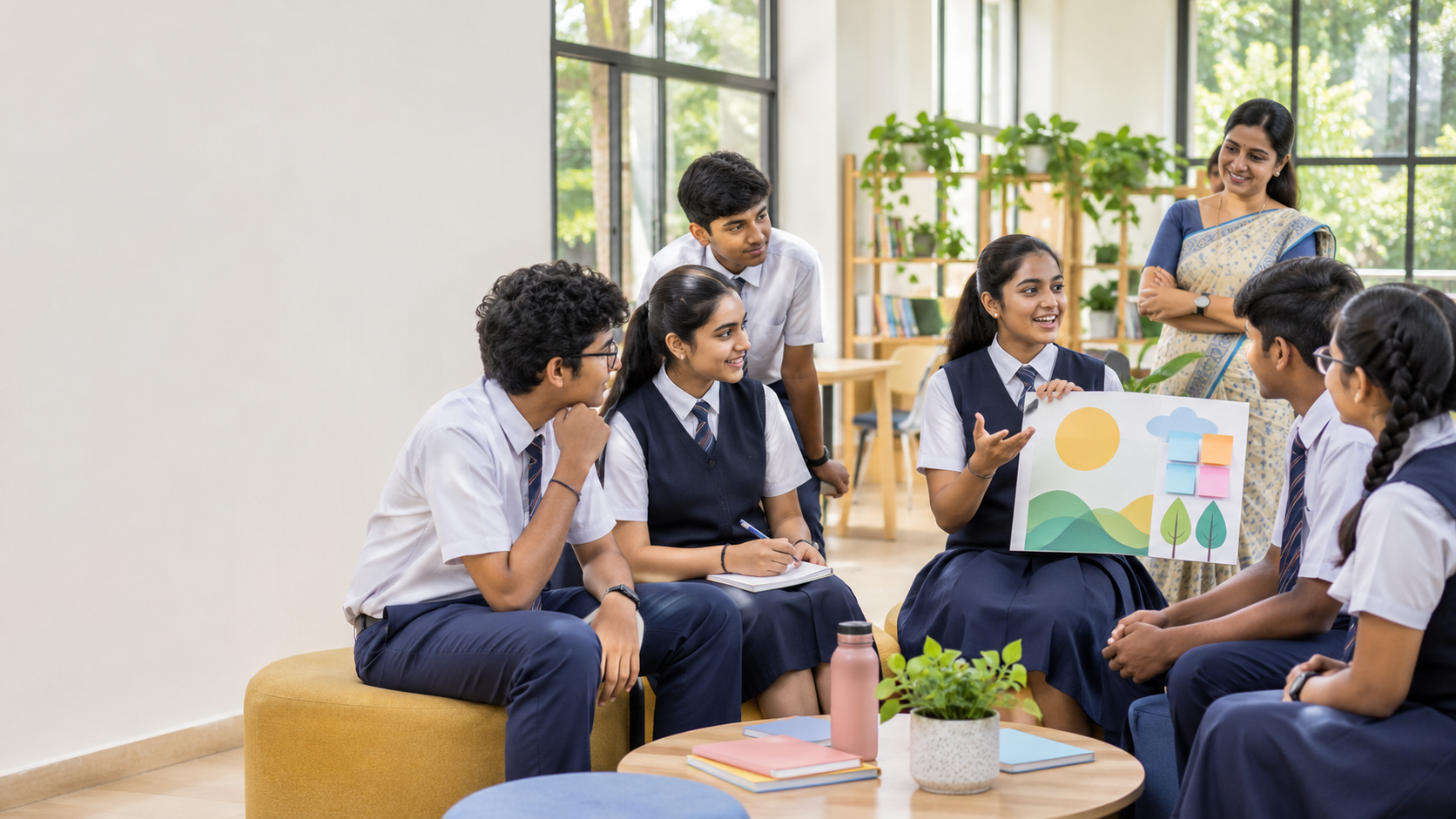
A school asks students for feedback after an event, receives many thoughtful answers and then moves on without response. Students quickly learn that sharing a view changes nothing. Meaningful student voice is not a suggestion box or a popularity contest; it is a structured way to listen, explain the scope of decisions and visibly close the loop.
Why this matters
Make learning more visible
Students can describe where instructions, routines or explanations help them—and where they need another route into learning.
Build participation skills
Giving a view, listening to a different view, explaining evidence and proposing a next step are learnable skills.
Strengthen belonging
When students see thoughtful follow-through, they are more likely to feel that school is something they help shape.
Improve routines carefully
Student perspectives can reveal practical friction in spaces, communications, transitions and classroom processes.
What does this look like in practice?
Student voice means creating purposeful opportunities for learners to share perspectives, questions and ideas about their learning and school experience—and ensuring adults respond transparently.
It does not mean students decide every policy or that the loudest voices set the agenda. Strong practice clarifies what is open for influence, includes different learners and reports back on what the school learned and decided.
Six principles that make the difference
These moves keep the work practical, humane and connected to better learning—not more paperwork.
Clarify the scope
Tell students whether they are helping to explore an issue, advise on options, co-design a routine or make a defined decision.
Offer more than one channel
Some students speak easily in a forum; others contribute better through anonymous prompts, paired conversations, drawings or class representatives.
Include different experiences
Invite perspectives across ages, languages, confidence levels and participation patterns. Avoid always choosing the same visible leaders.
Ask specific questions
“What should we improve?” is broad. “What makes group work hard to start in this class?” creates a more useful answer.
Teach discussion habits
Students need models for listening, disagreeing respectfully, using evidence and distinguishing a complaint from a proposal.
Close the loop visibly
Share what was heard, what is changing, what is not changing yet and why. This is what prevents participation from feeling tokenistic.
Eight practical actions to begin well
- 01.Begin with one school question students can reasonably influence within a month.
- 02.Use a short “notice, need, idea” prompt in classes or advisory time.
- 03.Create a rotating student forum with a simple selection process rather than relying only on elected high-profile students.
- 04.Give representatives a short briefing on the question, boundaries and how feedback will be used.
- 05.Collect patterns across classes before treating one comment as a school-wide finding.
- 06.Invite students to review a draft routine, communication or space plan before it is final.
- 07.Publish a simple “You said / We learned / Next step” response after each cycle.
- 08.Build time for reflection so students can assess whether the participation process itself felt safe and fair.
The VOICE Framework
Use this memorable process as a shared planning language for your team.
Validate
Clarify the question, boundaries and respect needed for participation.
Offer
Provide several safe ways for students to contribute.
Include
Seek perspectives beyond the usual confident voices.
Close
Report what was heard and the decision made.
Embed
Make meaningful participation a routine, not a one-off event.
The VOICE participation pathway
A five-step visual guide for moving from a student question to visible follow-through.
Illustrative example: improving the school library study space
Students say the library is welcoming but difficult to use for both quiet study and group work. The school creates a short, bounded voice cycle.
| Focus | What the team does | Evidence or next step |
|---|---|---|
| Question | What small changes would make the library work better for quiet study and collaborative learning? | A three-question student prompt, a short walkthrough and a representative discussion. |
| Student input | Students suggest clearer zones, a booking routine and a visual way to signal quiet periods. | Patterns are summarised; not every individual suggestion becomes a commitment. |
| Visible response | The school pilots two zones for four weeks and shares what it will review next. | Students help assess the trial and understand why some ideas need more time or resources. |
Shared responsibility makes the routine work
School leader
- Set clear boundaries and demonstrate that feedback receives a response.
- Allocate modest time or resources to test feasible student ideas.
Teachers
- Create safe classroom routines where students can express views without ridicule.
- Help students turn an observation into a respectful, specific proposal.
Students
- Share honestly, listen to peers and use evidence from their school experience.
- Recognise that meaningful influence includes understanding constraints and trade-offs.
Seven-Day Implementation Sprint
Use one week to create a practical first version. Tick each action as your team completes it.
0 of 7 actions completed
Reflection checklist
Use this as a conversation aid, not as a diagnostic test or performance rating.
Frequently asked questions
Is student voice the same as a student council?
A council can be one channel, but student voice is broader. It includes classroom listening, consultation, co-design and clear feedback loops across the school.
What if students ask for something the school cannot provide?
Explain the constraint honestly, explore alternatives where possible and report back. A respectful explanation is better than silence.
How can younger students take part?
Use age-appropriate methods such as visual prompts, paired talk, class meetings and short facilitated choices rather than relying only on formal meetings.
Should feedback be anonymous?
Offer anonymity for sensitive questions, but balance it with opportunities for dialogue and clarification. The best method depends on the issue.
How do we avoid hearing only from confident students?
Use multiple channels, rotate representatives, invite quieter formats and deliberately check whose experience may be missing.
Can student voice improve learning, not just events?
Yes. Students can help teachers understand task clarity, examples, group routines and the conditions that support participation—when questions are specific and responses are used carefully.
Common pitfalls and better choices
The most common implementation mistake is collecting student opinions without explaining what will happen next. Meaningful participation needs a clear boundary, inclusion and a visible response.
- Avoid asking a vague question; name one issue students can realistically influence.
- Avoid relying on only elected or outspoken students; offer multiple channels and rotate participation.
- Avoid promising every suggestion will happen; explain constraints honestly and explore alternatives.
- Avoid treating one comment as a trend; look for patterns across groups and settings.
- Avoid silent follow-up; publish what was heard, what changed and what remains under review.
Make the first listening loop manageable
Begin with one experience students understand well, such as the usefulness of feedback after a unit assessment or the safety of asking questions in class. Tell students what the school can influence, how their input will be used and when they will hear back.
A short class conversation, anonymous prompt card and small mixed-group discussion can surface more balanced insight than a single open meeting. The important final move is visible follow-up: show the decision, the reason for it and the next opportunity to contribute.
- Choose one changeable school experience.
- Offer more than one way to contribute.
- Summarise patterns without naming students.
- Close the loop in language students can understand.
Start small, learn visibly
Student voice becomes meaningful when it changes the quality of conversation, not merely the number of surveys a school sends.
Start with one honest question, include varied perspectives and show the response. Over time, students learn that participation is a shared responsibility.
Further reading: NCF for School Education 2023UNESCO: meaningful youth engagement handbookOECD: curriculum flexibility and student voice
Standalone infographic prompt: Create a premium educational infographic titled ‘The VOICE Participation Pathway’ with five stages: Validate, Offer, Include, Close, Embed. Use navy, blue, white and subtle gold; show a clear connected pathway; no statistics; high-contrast labels.
Turn professional learning into better daily practice
JFLN Academy supports schools with practical professional development, leadership routines and classroom-focused improvement.
Talk to JFLN Academy