
Overcoming the Fear of Death: Prophetic Guidance for a Peaceful Heart
Freedom from Death Anxiety: The Prophetic Way to Tranquility and Faith
Conquering the Fear of Death Through Prophetic Wisdom
Finding Peace in the Face of Death: A Prophetic Perspective
Blog Category Islam
Blog description The fear of death is a universal human experience, but Islam offers a deeply comforting perspective rooted in faith, reflection, and remembrance of Allah. This blog explores how the Prophet Muhammad ﷺ guided believers to overcome death anxiety through trust in Allah’s decree, preparing for the Hereafter, and living a life of purpose. Learn how embracing the prophetic teachings can transform fear into peace, despair into hope, and anxiety into steadfast faith in Allah’s mercy and promise of eternal life.
Living with the awareness of death is part of what makes us human. But for many, that awareness is destabilizing, manifesting as fear, avoidance, or Death anxiety Death anxiety is an intense and persistent fear of one’s death that is often magnified in times of illness, loss, or global uncertainty. For some, the fear of death might be less severe, showing up as a low hum in the background, an uneasiness that something could be taken away at any moment. Despite its centrality to the human condition, many of us lack the language or frameworks to navigate death. While this short article will discuss recent research into death anxiety and related prophetic wisdoms, the lessons can be applied more broadly to a general fear of death that might be more common.
The prophetic tradition provides a deeply compassionate and spiritually grounded approach to death. Rather than denying our fear of it, the Prophet ﷺ affirmed it. Rather than treating it as pathology, he offered a reframe rooted in divine mercy, purposeful living, and gratitude.
In one of the most moving hadith qudsi narrations, the Prophet ﷺ reports that Allah said:
My servant continues to draw near to Me with supererogatory works so that I shall love him. When I love him, I am his hearing with which he hears, his seeing with which he sees, his hand with which he strikes and his foot with which he walks. Were he to ask something of Me, I would surely give it to him, and were he to ask Me for refuge, I would surely grant him it. I do not hesitate about anything as much as I hesitate about seizing the soul of My faithful servant. He hates death and I hate hurting him.
This hadith offers a stunning theological truth: even those beloved to Allah fear death. And not only is this fear acknowledged, it is reciprocated with divine gentleness. Allah’s “hesitation” is not a shortcoming, but a manifestation of His mercy and love for us. Death anxiety, then, is not a sign of weak faith. It is part of the vulnerability of being human, and it is precisely that vulnerability that Allah responds to with His care.
Contributing factors: Mental health, sickness, and war
A 2024 meta-analysis involving over 24,000 people confirmed that individuals with mental health struggles often experience heightened fear of death. This fear was especially strong in people with anxiety-related conditions, suggesting that death anxiety may lie beneath other symptoms. The researchers emphasized that addressing death anxiety directly could be essential for lasting healing across a wide range of mental health conditions.
This burden was most prominent during the COVID-19 pandemic. A global review of studies found that roughly half of all people surveyed during the pandemic reported significant death anxiety. Among patients with COVID-19, people with chronic illnesses, and the elderly, rates were even higher. Even healthcare workers and members of the general population were deeply affected. Strikingly, fear of death increased as the pandemic continued, underscoring how sustained exposure to mortality shapes collective mental health.
Witnessing or living through war and genocide also further intensifies this fear. A longitudinal study of university students in Kuwait showed a significant increase in death anxiety following the 1990 Iraqi invasion, particularly among men. These findings support Templer’s foundational theory that death anxiety is shaped by environmental realities, including war. In Gaza, accounts from refugees in the Rafah camp describe a daily life shadowed by imminent death. Families reported constant fear, disrupted mourning rituals, and widespread psychological trauma. Despite these immense hardships, many Gazans continue to draw strength from faith, remembrance, and community. For others, who witness these events from afar, the constant visibility of suffering can awaken a similar fear of mortality and helplessness. In these moments, both individual and collective souls search for grounding.
Gratitude as a prophetic remedy
In the prophetic tradition, one of the most effective spiritual and psychological correctives to trials and fear is gratitude (shukr). The Qur’an describes the prophet Ibrahim (as) as “thankful for His favors” (Qur’an 16:121), despite the continuous trials faced by him and his family. The Prophet ﷺ would spend the night in prayer until his feet were swollen, saying, “Should I not be a grateful servant?” Gratitude reorients the believer not only toward the blessings that remain, but also to those that once were. In his moment of profound hardship, it is said that the prophet Ayub expressed deep gratitude for his past 70 years of good health and wealth. By focusing on abundance over scarcity—or its likelihood—gratitude reminds the heart that our lives are not arbitrary or abandoned, but deeply held in divine care.
Recent studies have also shown that gratitude can meaningfully reduce death anxiety. In one experimental study, older adults who were asked to reflect on events they felt grateful for reported much lower levels of death anxiety than those asked to write about frustrations or neutral experiences. This effect was not due to general mood improvement. Gratitude appeared to work specifically by helping people see their lives as full, purposeful, and worthy, which eased their fear of mortality.
Gratitude works by cultivating optimism. A 2024 study conducted after a major earthquake found that the positive effect of gratitude on reducing death anxiety depended on whether people believed good was still possible. Gratitude opened the heart, but it was optimism that gave people the ability to see a future beyond fear. There is a deeply human and prophetic moment that reflects this connection. Hayyan Abi al-Nadra recounts visiting Yazid ibn al-Aswad, who was dying. Wathila ibn al-Asqaʿ entered with him and asked Yazid, “What do you expect from Allah?” Yazid replied, “By Allah, I expect good from Allah.” Wathila then gave him glad tidings from the Prophet ﷺ:
Allah said: I am as My servant expects Me. If he expects good, he will have it. If he expects evil, he will have it.
In this powerful moment, optimism is not just a coping strategy. It is a form of faith. To expect good from Allah at the time of death is a spiritual achievement and a psychological shield. Just as Prophet Ayub (as) called out in his time of hardship, “Indeed, adversity has touched me, and you are the Most Merciful of the merciful” (Qur’an 21:83), optimism is a way of dying while trusting fully in divine mercy.
Gratitude nurtures this expectation of good. It helps the believer remember that their life has been touched by grace, even in hardship. It prepares the soul to meet its Lord with hope, not despair. Another prophetic teaching emphasizes this need and the recognition that allows such work to happen. The Prophet ﷺ said:
There are two blessings which many people waste: health and free time.
Psychologists have found that regrets and unfinished goals (that may result from neglect) often worsen death anxiety. This hadith becomes a call to be present, intentional, and grateful for the blessings Allah has given us. To use health and time well is not just productive, it is spiritually protective. When we know that we have done the very best we can in our efforts to reach our objectives, we are able to meet death with readiness rather than regret. We are grateful for the opportunities Allah provided and for the awareness and ability to make use of them, knowing that no sincere effort to please Him will go unnoticed (Qu’ran 53:39–41).
Knowing our ultimate destination
The believer also draws comfort from something deeper than gratitude and optimism alone—the certainty that death is not the end, but the beginning of eternal life. The Prophet ﷺ taught his companions not only how to live, but also how to die. In his final moments, he repeated with calm assurance: “With the Highest Companion (al-Rafīq al-Aʿlā)”. This was not a resignation, but a reunion. The Qur’an reassures the faithful in Surah Fussilat:
Indeed, those who have said, “Our Lord is Allah,” and then remained steadfast, the angels will descend upon them, [saying,] “Do not fear and do not grieve but receive good tidings of Paradise, which you were promised.” (Qur’an 41:30–32)
Share The Prophet ﷺ also described the moment of death as an opportunity for reciprocal yearning, where the creation meets their Creator: “Whoever loves to meet Allah, Allah loves to meet him, and whoever hates to meet Allah, Allah hates to meet him.” It was said to him: “O Prophet of Allah, all of us hate death and are averse to it.” He said: “It is not like this. Rather, when a believer is given the glad tidings of the mercy of Allah, His pleasure, and His Paradise, [then] he loves to meet Allah and Allah loves to meet him.” These teachings are far from empty platitudes and theoretical exercises. They are deeply relevant, grounding us in the truth that is to come. Death is a doorway, not a disappearance to fear. For the believer, instead of being the end of life, it is the beginning of reunion, fulfillment, and eternal rest. Conclusion
The prophetic way is not to suppress the fear of death, but to transform it. Gratitude centers the heart in meaning. Optimism directs the soul toward mercy. And Allah, in His tenderness, meets the anxious heart not with punishment, but with hesitation, care, and love. In a time when death anxiety is rising, whether due to illness, trauma, or witnessing global suffering, this prophetic wisdom offers a spiritual and psychological refuge. To be grateful. To be hopeful. And to know that even in death, we are not alone.
Featured Image
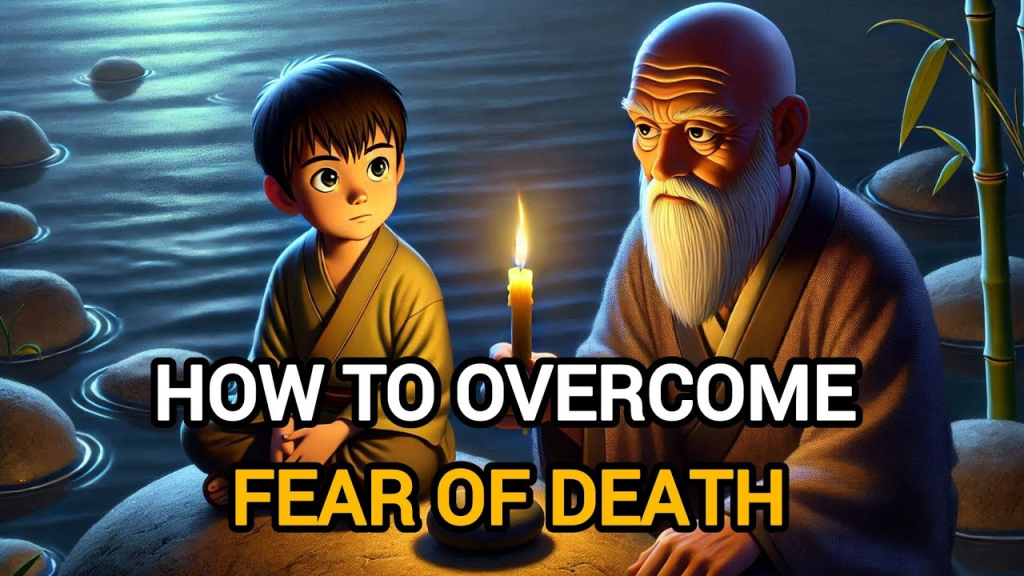
Please include a short bio Mushtabi Fatma writes about Islamic spirituality, faith, and personal growth, drawing from the Qur’an and Sunnah to inspire hearts toward peace and purpose. Her reflections aim to help readers strengthen their connection with Allah and find tranquility in every stage of life.
Notes if Any Include relevant Qur’anic verses such as “Every soul shall taste death” (Qur’an 3:185) and “Indeed, to Allah we belong and to Him we shall return” (Qur’an 2:156).
Mention authentic Hadiths highlighting the Prophet ﷺ’s teachings on remembering death and preparing for the Hereafter.
Emphasize the balance between fear and hope — khawf and raja’ — in the believer’s heart.
Consider addressing modern psychological terms like “death anxiety” and how Islamic spirituality offers a holistic cure.
Conclude with practical prophetic steps: frequent remembrance of death, seeking forgiveness, doing righteous deeds, and deepening tawakkul (trust in Allah).
About The Author


