
Peer Observation for Teachers: A Safe, Practical Cycle That Improves Classroom Practice
Build a culture where teachers learn from classroom evidence, not judgement.
Explore the guide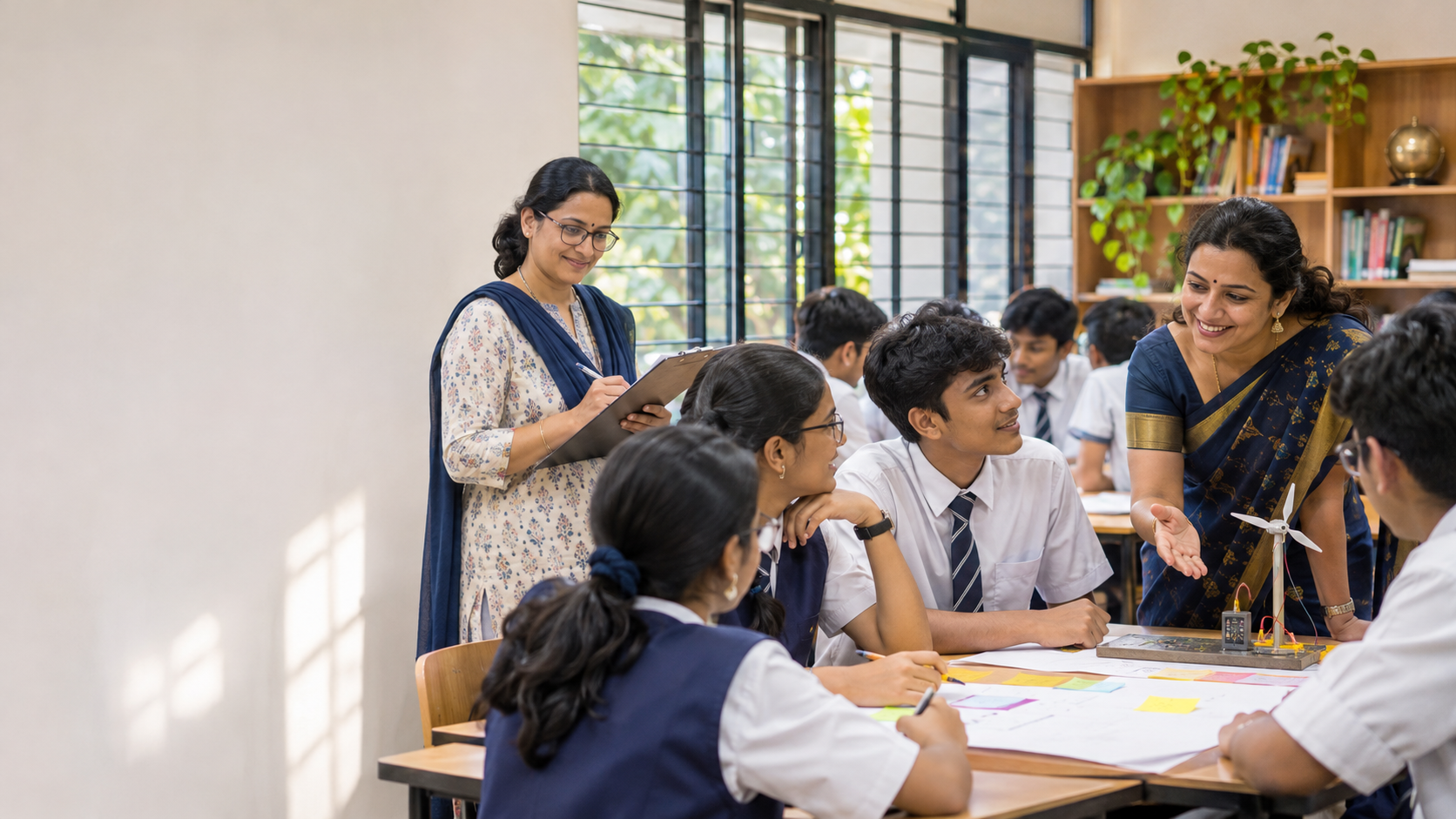
A teacher has just tried a new questioning routine. Students seem more willing to answer, but the teacher cannot see every table, every pause or every learner response while leading the lesson. A well-designed peer observation gives that teacher a second pair of professional eyes—without turning a colleague into an inspector.
Why this matters
Make training visible
A workshop idea becomes more useful when a colleague can notice how it lands with actual learners.
Reduce professional isolation
Teachers gain a safe reason to talk about classroom choices, uncertainty and promising practice.
Focus on students
The observer records what learners say, do and produce rather than giving vague judgements.
Build shared language
Over time, teams develop clearer ways to discuss questioning, routines, participation and feedback.
What is peer observation for teachers?
Peer observation is a short, agreed professional-learning cycle in which one teacher visits another class to gather evidence around a specific learning question. It is most useful when it is developmental, voluntary and confidential—not a hidden performance appraisal.
- A narrow focus: one question such as “Which students explain their reasoning after wait time?”
- Descriptive evidence: what the observer sees or hears, without labels such as “good” or “weak”.
- Teacher ownership: the host teacher chooses the focus and interprets evidence first.
- A next step: the conversation ends with one manageable experiment, not a long list of corrections.
Six practices that make a visit worthwhile
The quality of the conversation matters more than the length of the visit. These six habits keep the process focused and respectful.
Start with a learner question
Choose a question connected to students, not a broad judgement about teaching. “Who begins the task independently?” produces better evidence than “Was the lesson engaging?”.
Agree the boundary before the lesson
Clarify the time, focus, observer position and note-taking method. The observer should not interrupt unless a practical or safety reason was agreed.
Capture evidence, not opinions
A seating map, a tally of responses or a few exact student comments are more helpful than an overall score.
Let the teacher reflect first
Begin with “What did you notice?” or “What felt different?” before sharing notes. Reflection is stronger when the host teacher makes meaning from the lesson.
Ask coaching questions
Use questions that open thinking: “What might explain that pattern?” and “What would you try with this group next time?”.
Choose one small next move
A teacher is more likely to test one precise change—such as paired rehearsal before whole-class talk—than a long set of suggestions.
Eight practical ways to launch a peer-observation cycle
Start light. A 15-minute visit and 10-minute conversation can generate meaningful learning when the focus is clear.
- 01. Invite a small volunteer pair or triad for the first cycle rather than mandating a whole-school rollout.
- 02. Use a one-page pre-brief: lesson context, chosen question, evidence to collect and confidentiality agreement.
- 03. Schedule observation windows into the timetable so participation does not depend on goodwill alone.
- 04. Give observers a factual note template with headings such as student talk, task access, questions and misconceptions.
- 05. Ask observers to scan the room, not just watch the teacher at the front.
- 06. Protect a same-day debrief where possible, while the lesson details are fresh.
- 07. Ask each teacher to write a private “I will try…” statement after the conversation.
- 08. Share patterns across staff only with permission and without naming an individual teacher.
The PRACTISE Cycle
Use this simple visual process as an in-article infographic and a printable staff prompt.
Pinpoint
Choose one learner-focused question.
Respect
Agree consent, privacy and roles.
Agree
Decide what counts as evidence.
Capture
Write observations, not verdicts.
Talk
Begin with teacher reflection.
Improve
Name one useful next move.
Support
Plan the next classroom trial.
Evaluate
Review learning and refine.
The peer-observation learning loop
A simple sequence that keeps observation developmental, specific and respectful.
Worked example: Class VII science discussion
A teacher wants more students to explain why a material conducts electricity. A colleague observes 12 minutes of group discussion.
| Observation focus | Evidence captured | Next action |
|---|---|---|
| Who speaks after a question? | Four confident students answer first; most groups talk after a 25-second pause. | Use silent think time, then paired explanation before inviting responses. |
| How do students use evidence? | Six groups point to the worksheet; two groups use only a one-word answer. | Add a sentence stem: “My evidence is…” and model one example. |
The observer does not decide whether the lesson was “good”. The evidence helps the teacher choose a focused change for the next lesson.
What each person can do
School leaders
- Protect timetable space and keep peer observation separate from appraisal.
- Model vulnerability by inviting observation of their own meetings or learning walks.
- Celebrate learning patterns, not individual rankings.
Observer
- Keep notes factual and discreet.
- Listen before offering interpretation.
- Respect the agreed confidentiality boundary.
Host teacher
- Choose a question worth exploring.
- Share context honestly, including a concern or experiment.
- Select the next step that fits the learners.
Seven-Day Peer Observation Launch
Use one small action each day to build trust before the first classroom visit.
0 of 7 actions completed
Peer Observation Readiness Check
Before the visit, make sure these foundations are in place.
This checklist is for reflection and conversation; it is not a diagnostic test or performance rating.
Frequently asked questions
How long should a peer observation be?
A focused visit can last 10–20 minutes. The purpose and evidence matter more than observing an entire lesson. Longer visits can be useful when the teacher specifically wants them.
Should peer observation be compulsory?
A school may establish a shared development expectation, but trust grows faster when the first cycles are voluntary, clear and non-punitive. Participation should never feel like covert appraisal.
What should an observer write down?
Use observable evidence: student comments, participation patterns, lesson timings or work samples. Avoid labels that the teacher cannot act on.
Can two new teachers observe one another?
Yes. The goal is not to position one person as an expert. A clear question and an evidence template make reciprocal observation useful at every career stage.
How is peer observation different from formal appraisal?
Appraisal evaluates performance against formal expectations. Peer observation is a teacher-owned learning conversation focused on a chosen area of practice.
What if a student needs support during the visit?
Learning and safeguarding take priority. The observer can help only if that role was agreed, or alert the teacher if there is an urgent concern.
Turn observation into professional learning
Peer observation is not about catching teachers out. It is about making learning visible, creating a respectful conversation and choosing one better next move.
When schools protect trust, time and teacher ownership, classroom visits can become a reliable bridge between professional development and daily practice.
Further reading: National Education Policy 2020 · OECD: professional relationships in school communities
Structured-data recommendation: Enable Article and FAQPage schema through the site’s SEO tool, using this article title and the FAQ questions above.
Strengthen classroom learning through purposeful coaching
JFLN Academy supports schools with teacher development, observation and coaching structures that connect training with real classroom practice.
Talk to JFLN Academy