
1. Overview: Human vs. Ape Brain

4
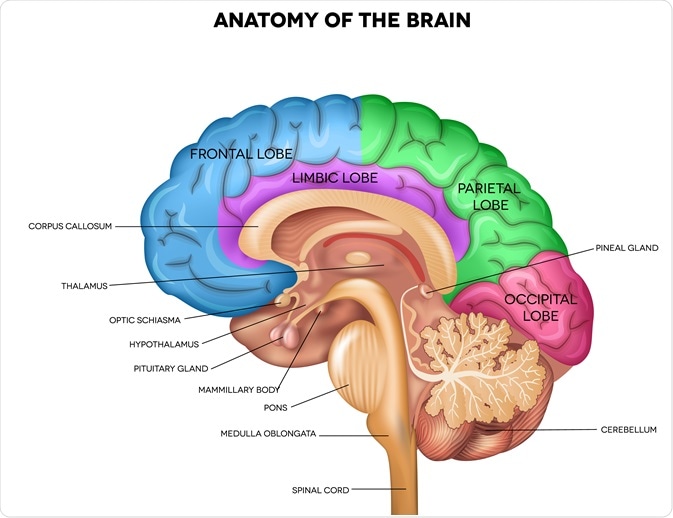
Although human and ape brains share the same basic structures (cortex, cerebellum, limbic system, brainstem), they differ significantly in size, organization, and specialization.
2. Size & Proportion Differences
Total Brain Size
- Human brain: ~1,300–1,500 grams
- Chimpanzee brain: ~350–400 grams
- Gorilla brain: ~450–500 grams
But size alone isn’t the key—organization and neural density are more important.
Cerebral Cortex Difference


Humans have:
- Much more cortical folding (gyri & sulci) → more surface area
- Higher neuron count in the cortex (~16 billion vs. ~6–7 billion in great apes)
This greatly enhances:
- abstract reasoning
- language
- planning
- complex social behavior
3. Prefrontal Cortex (Decision-Making)
Human Prefrontal Cortex
- Extremely enlarged
- Supports long-term planning, moral reasoning, inhibiting impulses, and imagination
Ape Prefrontal Cortex
- Present but smaller and less specialized
- Supports simpler decision-making and short-term planning
This is one of the most important structural differences.
4. Language & Communication Areas
Broca’s Area & Wernicke’s Area
- In humans: highly developed, enabling speech, grammar, symbolic thinking
- In apes: present but much smaller; supports vocalizations but not complex language
This is why apes can learn symbols or signs but cannot produce human-like speech.
5. Social & Emotional Brain Systems
Both humans and apes have:
- Amygdala (emotion processing)
- Hypothalamus (basic drives)
- Limbic system (memory, emotion)
But humans show:
- More connections between the prefrontal cortex and limbic system, enabling better emotional regulation and empathy.
Apes rely more on immediate emotional responses.
6. Motor Control & Hand Coordination


Humans:
- Larger motor cortex area for hand and speech muscles
- Supports fine motor skills (writing, tool-making)
Apes:
- Motor cortex optimized for climbing and strength, less for precision
7. Brainstem & Cerebellum (Movement & Balance)
These structures are similar, but:
- Humans have a cerebellum tuned for fine motor learning, speech coordination, and complex tool use.
- Apes have cerebellar specialization for climbing, brachiation, and power-based movement.
8. Development & Life History
Humans:
- Brain develops slowly; long childhood → extended learning
- High metabolic cost (brain uses ~20% of body’s energy)
Apes:
- Faster brain development
- Shorter learning period
This extended human childhood allows more cultural transmission, language learning, and complex skill development.
Summary Table
| Feature | Humans | Apes |
|---|---|---|
| Brain size | Much larger | Smaller |
| Cortex folding | Highly folded | Less folded |
| Prefrontal cortex | Very large | Smaller |
| Language areas | Highly developed | Limited |
| Neuron count | Much higher | Lower |
| Fine motor control | Very advanced | Moderate |
| Emotional regulation | More complex | More instinctual |
| Learning period | Very long | Shorter |
About The Author
