
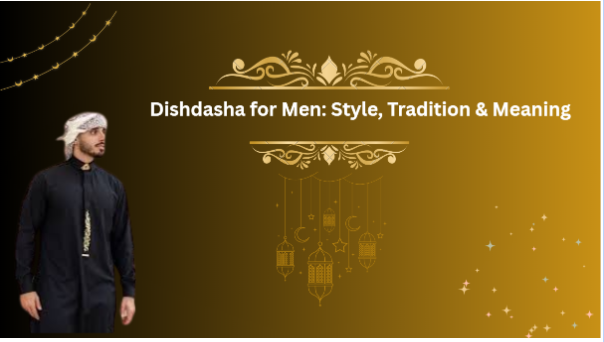
The dishdasha (or dishdasha, thobe, or kandura) is an ankle-length robe made of flowy fabric that men typically clothe themselves in throughout the Arabian Peninsula and some parts of North Africa. It is so much more than clothing; it’s modesty, the embodiment of identity, and comfort in warm temperatures.
What Is a Dishdasha?
At its simplest, a dishdasha is a floor-length robe with long sleeves that extends to the ankles and is usually made from a lightweight textile like cotton or linen. It often features a high neck with buttons or a wide opening down the center of the front and roomy shoulders.
In different places, it may go by thobe, thawb or kandura,” and “jalabiya.” But the idea is the same: an easy-to-wear conservative garment that works in hot weather.
Cultural Significance & Symbolism
The dishdasha has a place in the local culture. It is not just for daily wear but also for special occasions—such as weddings, the Eid holiday, and national celebrations in many Gulf countries.” A crisply ironed dishdasha is a message of respect, heritage, and national dignity. The muslim dress of men is the classic representative of tradition and modesty combined, keeping you cool during the summers and warm in winters. For example, in Oman the regal sass, or kumma, also accompanied by the darker massar, signifies national and/or patriotic symbols of pride and nationalism.
Style, Fabric & Regional Variations
Fabrics & Climate Suitability
They are usually worn in a hot, dry climate and therefore made of a breathable fabric such as cotton or linen. Lighter colors, most commonly white, are preferred in warmer weather to reflect heat and keep the body cool, while black is usually worn to absorb heat, keeping warm in cold conditions.
Regional Style Differences
- Dubai White thobe/dishdasha with no collar in leg size from Dubai, in the United Arab Emirates, standard everyday active wear for men: The kandura itself also has variations across different emirates and may have a tassel on the neckline.
- In Saudi Arabia, the thobe with a shirt collar and buttons down the front is standard.
- In North Africa, comparable coats (jalabiya or djellaba) derive from local tailor traditions and take the function of modest long-coat dresses.
How to Wear a Dishdasha
Wearing the dishdasha properly begins with fit and modesty. Key considerations:
- Should fall to the ankles (not dragging excessively).
- Should be loose enough to allow ease of movement.
- Sleeves should reach the wrists.
In Gulf countries, an agal and head covering are optional accessories. For formal events, a cloak known as a bisht may be added.
Modern Trends & Global Adoption
Though deeply traditional, the dishdasha has evolved to suit contemporary tastes. It can be worn by Muslim men who reside outside of the Gulf region for Jummah prayers, Eid, or other cultural occasions. Modern alterations The modern rendition strives to offer slimmer cuts, muted colors, and better materials to help the garment find its place in today’s world.
Choosing the Right Dishdasha
Tips to pick wisely:
- Material: Opt for breathable fabrics such as cotton and linen in hot climates.
- Color: Stick with white for everyday wear. For more serious occasions you can go with darker colors or even trimmed lines.
- Fit and length: Make sure it skims the ankles without puddling.
- Occasion: Save plain styles for every day and embroidered collars or special fabrics for dressier occasions.
Understanding the Dress Code & Modesty
This is of prime importance in Islam where modesty in attire is concerned. Men’s awrah is from navel to knee in salah, and wearing this thobe itself provides full-length cover touching the ankle of a person, thus complying with modesty.
Having to wear a dishdasha is not it. However, it does imply a level of modesty and cultural pride beyond the minimum required by obligation.
Occasions & When to Wear a Dishdasha
- Daily wear: From the Gulf to some other countries, it’s a casual outfit for men.
- Religious times: Jummah, Ramadan, and Eid.
- Special events: Weddings, galas, and national days.
- Travel: It’s a sign of respect in many cultures, and Western women who have put it on while traveling abroad say it’s easier than trying to find long-sleeved and high-necked clothes in hot climates.
Care & Maintenance
Taking care of your dishdasha ensures it lasts and maintains its look:
- Wash according to fabric instructions (cold for cotton is best).
- Iron or steam periodically to keep excellent wear, especially white robes.
- Keep in a clean, dry place; ideally, use a garment bag for your suit.
- Consider the colors: white robes may be more prone to stains, and darker ones could FRAY less over time.
Conclusion
The male dishdasha is far more than just a garment—it’s an embrace of comfort, culture, faith, and tradition. From its functionality in hot climates to its part in reflecting modesty and distinction, the thobe is a constant feature of Muslim men’s clothing. When you wear a mother-of-pearl dishdasha, it speaks both to tradition and personal style, which is what fashion is all about.
About The Author


