
It is 15th century. After conquering Istanbul Sultan Mehmed Fatih continued to move further. It is noted that when he reached city Jajce, in former Kingdom of Bosnia, over thirty thousands of families embraced Islam as its religion. Many historians are discussing about reason of accepting Islam in Bosnia, there are objective view of that, but also and biased view.
Blog Category islam
Blog description Islam in the Middle of Christianity — A Historical, Theological, and Cultural Perspective
Islam emerged in the 7th century CE in the Arabian Peninsula, a region already deeply influenced by Christian and Jewish communities. Geographically, intellectually, and spiritually, Islam arose in the middle of Christianity—not as a break from earlier faiths but as a continuation and completion of the same monotheistic tradition.
This unique position shaped Islam’s beliefs, global mission, and relationship with Christians across history.
1. Islam Between Judaism and Christianity in the Abrahamic Chain
Islam stands as the third major Abrahamic faith, following:
- Judaism (law-centered)
- Christianity (salvation-centered)
- Islam (submission-centered)
Muslims believe that Islam restores the pure monotheism of Prophet Abraham, correcting theological deviations that developed over time.
Islam recognizes:
- All earlier prophets
- All earlier scriptures in their original form
But holds the Qur’an as the final preserved revelation.
2. Islam’s View of Christianity
Islam honors Christianity as a divinely revealed religion, not a false system. Muslims are commanded to respect Christians as “People of the Book.”
Islam affirms:
- The miraculous birth of Jesus Christ
- His prophethood and moral greatness
- The Gospel (Injīl) as originally revealed by God
Islam rejects:
- The divinity of Jesus
- The concept of Trinity
- The doctrine of original sin and atonement through crucifixion
Instead, Islam teaches:
- Jesus was a human prophet, not God
- Salvation is through faith, repentance, and righteous deeds
Thus, Islam stands theologically in between Judaism’s strict law focus and Christianity’s divinity-centered theology.
3. Islam Arising in a Christian-Dominated World
At the time of Islam’s rise:
- The Byzantine Empire was the center of Christian power
- Christian theology dominated religious discourse in the Middle East
- Many Arab tribes had exposure to Christian monks and churches
Islam entered this setting:
- Challenging distorted monotheism
- Affirming Jesus without deifying him
- Restoring God’s absolute oneness (Tawḥīd)
Within a century, Islam spread across lands once controlled by Christianity—from Syria and Egypt to North Africa and Spain.
4. Islam as a Bridge Between East and West
Islam historically functioned as a civilizational bridge between the Christian West and the Eastern world:
- Preserved Greek philosophy during Europe’s Dark Ages
- Advanced medicine, astronomy, algebra, and optics
- Influenced European Renaissance through Muslim Spain (Al-Andalus)
This placed Islam intellectually and culturally between Christian Europe and the Eastern civilizations.
5. Shared Moral Values Between Islam and Christianity
Both Islam and Christianity strongly emphasize:
- Belief in one God
- Moral accountability
- Love, justice, and charity
- Family structure
- Modesty and humility
- Care for the poor and oppressed
Islam’s Prophet, Prophet Muhammad, upheld treaties with Christians and protected their churches, monks, and worship rights—demonstrating coexistence in practice.
6. Conflict and Coexistence in History
The relationship between Islam and Christianity includes:
- Peaceful coexistence in many regions
- Political conflicts such as the Crusades
- Intellectual exchanges through translations and debates
- Modern interfaith dialogue for peace and cooperation
These conflicts were often political, not purely religious.
7. Islam’s Unique Position Today
Today, Islam stands:
- Theologically between Judaism and Christianity
- Geographically between East and West
- Culturally between tradition and modernity
- Spiritually between law and love
With nearly 2 billion followers, Islam continues to shape global religious dialogue with Christianity in areas of:
- Ethics
- Human rights
- Peacebuilding
- Social justice
Every empire that ruled in the world had its good and bad side, so did Ottoman Empire. But we need to know that if someone performed violence or any kind of it, it was for his own ‘pleasure’, it was never ideological.
It’s the same with Islam in Ottoman Empire, they could have bad leaders, but they never forced anyone to embrace their religion, and there are many evidences of it.
However, why exactly people of then called Kingdom of Bosnia embraced Islam?
Islamic presence in Bosnia was actually recorded centuries before Ottomans. Some sources are saying that Islam in Bosnia appeared arround 8th century.
Abu Hamid el Garnati, arabic geographer, recorded that there were muslims known as Maghrib who fought on the side of Hungary against Byzantium in 12th century. In the same war there was present Bosnian Ban Boric (ban is medieval title) who was ally of Hungary. He brought a group of muslims, after being called Kaleesies, they settled in Northeastern Bosnia, which witnesses todays toponym of city Kalesija.
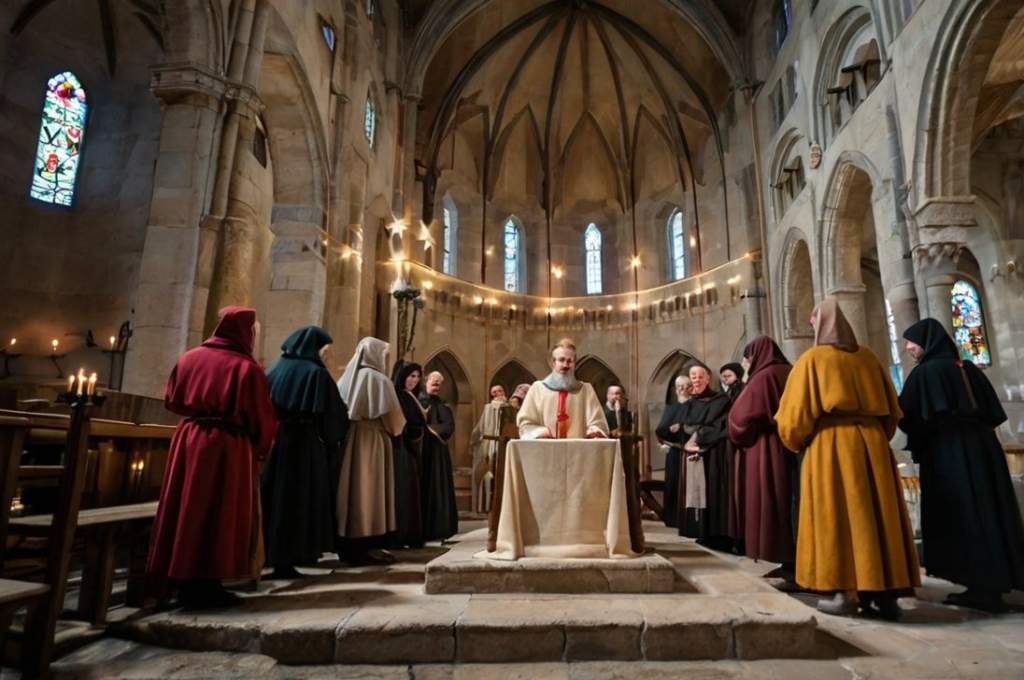
There is also more interesting evidences that people of Bosnia didn’t embrace Islam by force. Before Islam appeared on these teritories, Kingdom of Bosnia was not Orthodox or Catholic christians, they were called heretics by both of them, Byzants and Rome. Their religion was Bosanska Crkva, meaning Church of Bosnia and it was amazingly similar to Islam. They were against idolatry and icons, against feudalism, but the most interesting fact is that they prayed five times a day. They took care of cleanliness of body and place.
Of course, when Islam did come to them, they had no problem of embracing it. It’s fascinating that so many empires ruled over Bosnia after Ottomans, yet no one could remove Islam from their hearts.
Today, surrounded by Orthodox Christians by one, and Catholics by another side, Bosnian muslims are still here. That’s the biggest evidence that people of Bosnia never embraced religion because of interests, but because of heart and love for the truth.
Featured Image
Please include a short bio
Prophet Muhammad was born in 570 CE in Mecca. Known for his honesty and integrity even before prophethood, he received the first revelation at the age of 40 through Angel Jibrīl (Gabriel). Over 23 years, the divine message was revealed, which later became the Qur’an.
He preached:
- Pure monotheism (Tawḥīd)
- Justice, mercy, and moral character
- Equality of all human beings
- Peaceful coexistence with other faiths
Despite persecution, he established the first Islamic state in Medina based on justice and religious freedom. He passed away in 632 CE, leaving behind a complete moral, spiritual, and social system that continues to guide over 2 billion Muslims worldwide.
Notes (Key Points for Quick Revision)
- Islam is the final religion in the Abrahamic sequence after Judaism and Christianity.
- Islam honors but does not worship Jesus Christ (peace be upon him).
- Muslims believe Jesus was:
- A mighty prophet
- Born miraculously
- Given the original Gospel
- A mighty prophet
- Islam rejects:
- Trinity
- Jesus as God
- Original sin
- Trinity
- The Qur’an is considered the final and preserved revelation from God: Qur’an.
- Prophet Muhammad (PBUH):
- Is the last messenger
- Brought a universal message for all humanity
- Protected the rights of Christians and Jews
- Is the last messenger
- Christianity and Islam share:
- Belief in one God
- Prophet tradition
- Moral values (charity, justice, mercy)
- Accountability after death
- Belief in one God
- Major theological difference:
- Christianity → salvation through crucifixion
- Islam → salvation through faith, repentance, and good deeds
- Christianity → salvation through crucifixion
- Historically:
- Islam spread through Christian lands such as Syria, Egypt, and Spain
- Muslims preserved ancient knowledge during Europe’s Dark Ages
- Islam spread through Christian lands such as Syria, Egypt, and Spain
- Islam acts as a bridge between East and West, combining:
- Law + spirituality
- Faith + action
- Worship + social justice
- Law + spirituality
About The Author


