
Blog Category Islamic
Blog description In Islamic economic thought, maslahah — the pursuit of public welfare and collective benefit — stands at the heart of ethical and economic decision-making. Among classical scholars, Imam Abu Hamid Al-Ghazâlî offered one of the most influential and comprehensive explanations of maslahah, grounding it firmly in the higher objectives of Shariah (Maqāṣid al-Sharī‘ah).
According to Al-Ghazâlî, true economic prosperity is not merely the accumulation of wealth, but the preservation and flourishing of religion, life, intellect, lineage, and property. An economy rooted in maslahah therefore promotes justice, prevents harm, protects human dignity, and strives for a balanced distribution of resources.
Today, as societies grapple with widening inequality, ethical crises in global finance, and the search for sustainable development models, Al-Ghazâlî’s vision offers timeless guidance. His understanding of maslahah provides a framework where economics aligns with morality, social equity, and the well-being of humanity — reaffirming that economic systems must serve people, not the other way around.
In the realm of Islamic economic thought, the concept of mashlahat occupies a very important position as a moral and legal foundation. Abu Hamid Al-Ghazâli, a great thinker of the 11th century, made a profound contribution in formulating how mashlahat became the main axis in assessing human activities, including in the economic field. For Al-Ghazâli, Islamic law not only regulates worship, but also aims to maintain the overall welfare of humans—physically, spiritually, and socially.
Mashlahat, according to Al-Ghazâli, is any form of benefit recognized by Islamic law to maintain the five main objectives of human life: religion, soul, reason, offspring, and wealth. These five things are known as maqashid al-shari’ah, and are used as a benchmark in assessing whether an economic policy or practice is acceptable according to sharia. He divides mashlahat into three levels: dharuriyyat (primary), hajiyyat (secondary), and tahsiniyyat (tertiary). This classification shows that not all benefits carry the same weight, and that priorities in economic policy must consider urgency and impact on people’s lives.
Al-Ghazâli places mashlahat as the main objective of Islamic law, which aims to maintain human welfare holistically. In an economic context, mashlahat becomes a moral compass that assesses whether an economic activity is in line with Islamic values and the objectives of Islamic law. In Al-Ghazâli’s thinking, economics is not merely a matter of production and consumption, but also concerns justice, ethics, and social welfare. He rejects economic practices that are solely oriented towards personal gain without considering social and moral impacts.
In practice, Al-Ghazâli rejected economic approaches that were solely oriented towards material gain. He emphasized the importance of justice in the distribution of wealth, the prohibition of hoarding goods, price manipulation, and the protection of consumers and producers. For him, the market was not merely a place of transaction, but a social space that must be protected from practices that undermine the common good. Therefore, instruments such as zakat, waqf, and the prohibition of usury are not merely legal rules, but a tangible expression of Islam’s commitment to mashlahat.
Al-Ghazâli’s thinking on mashlahat also opens up space for ijtihad in responding to contemporary economic challenges. In the modern era, mashlahat can be a strategic principle in designing an inclusive Islamic financial system, assessing fiscal and monetary policies, and encouraging investment that is oriented towards sustainability and social impact. Mashlahat is not only a legal concept, but also an ethical value that connects spirituality and economic reality.
Abu Hamid Al-Ghazali’s thoughts on mashlahat show that Islamic economics is not only about what is halal and haram, but also about justice, ethics, and humanity. Mashlahat becomes a bridge between law and social reality, between spiritual values and material needs. In the modern era, mashlahat remains relevant as a foundation in designing an economic system that favors the welfare of the people and the sustainability of the world.
Featured Image
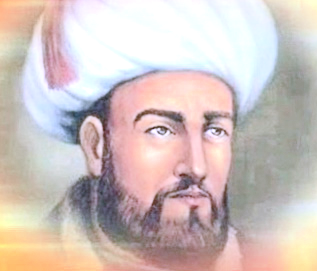
The Concept of Maslahah in Islamic Economics: The Perspective of Abu Hamid Al-Ghazâlî
In Islamic economic thought, maslahah — the pursuit of public welfare and collective benefit — stands at the heart of ethical and economic decision-making. Among classical scholars, Imam Abu Hamid Al-Ghazâlî offered one of the most profound and enduring explanations of this principle, anchoring it within the higher objectives of Shariah (Maqāṣid al-Sharī‘ah).
For Al-Ghazâlî, genuine prosperity is not measured by wealth accumulation alone. Rather, it lies in safeguarding the essential pillars of human existence: religion, life, intellect, lineage, and property. An economy grounded in maslahah therefore seeks justice, prevents harm, protects human dignity, and distributes resources in a manner that supports societal balance and welfare.
In an era marked by inequality, financial instability, and growing demand for ethical economic models, Al-Ghazâlî’s vision remains deeply relevant. His concept of maslahah reminds us that economics is not merely about markets and numbers — it is fundamentally about serving humanity, fostering moral development, and advancing the common good.
Please include a short bio
Mushtabi Fatma is a writer specializing in Islamic thought, ethical finance, and value-centred development. She explores how classical scholarship can inspire modern solutions, helping readers reconnect faith, knowledge, and real-world progress.
Notes (if any)
- Include Al-Ghazâlî’s definition of maslahah and how he links it to the Maqāṣid al-Sharī‘ah (preservation of religion, life, intellect, lineage, property).
- Clarify the difference between maslahah and mere public interest — it must not contradict Shariah.
- Cite Al-Ghazâlî’s work Al-Mustasfā as a key reference for his theory of maslahah.
- Discuss types of maslahah:
- Ḍarūriyyāt (essentials)
- Ḥājiyyāt (needs)
- Taḥsīniyyāt (complementary / enhancements)
- Ḍarūriyyāt (essentials)
- Show how maslahah applies to modern Islamic economics:
- Poverty alleviation and welfare policies
- Ethical investment and finance
- Fair market regulations
- Anti-corruption and transparency
- Poverty alleviation and welfare policies
- Contrast with utilitarianism — maslahah seeks universal welfare with a moral and divine framework, not just majority benefit.
- Add contemporary applications: halal standards, Islamic finance governance, waqf development, zakat systems.
- Consider including a quote from Al-Ghazâlî on welfare or human purpose for authenticity.
About The Author


