
How does Islam represent women?
What is the role of a women in Islam?
Muslim women are oppressed.
Blog Category islamic
Blog description Women in Islam – A Daughter, A Wife, and A Mother
Islam places women at the heart of family and society, granting them dignity, honor, and rights long before many other civilizations recognized such values. As a daughter, as a wife, and as a mother, a woman in Islam embodies compassion, strength, and spiritual excellence. Her roles are not limitations but sources of profound value and reward.
As a Daughter – A Blessing and a Mercy
Islam transformed the status of daughters from being undervalued to being cherished blessings.
The Prophet Muhammad (PBUH) emphasized their honor, saying that raising daughters with kindness leads to Paradise.
Key points:
- She is a source of mercy and brings barakah (blessing) to the family.
- Providing her with education, love, and protection is considered an act of worship.
- Parents who raise daughters with patience and care are promised great reward.
Islamic teaching:
“Whoever has three daughters, and he accommodates them, shows mercy towards them, and supports them, Paradise is guaranteed for him.” (Hadith)
Meaning: A daughter elevates her parents’ rank through her presence and upbringing.
As a Wife – A Partner in Tranquility
Marriage in Islam is built on love (mawaddah), mercy (rahmah), and tranquility (sakinah).
A wife is not a subordinate but a partner — someone honored, respected, and entitled to financial and emotional security.
Key points:
- She has the right to dignity, respect, mahr (bridal gift), and maintenance.
- She is a partner in building a righteous home and nurturing the next generation.
- The Prophet (PBUH) taught that the best men are those best to their wives.
- Her counsel and feelings matter; marriage in Islam is mutual compassion.
Islamic teaching:
“They are garments for you, and you are garments for them.” (Qur’an 2:187)
Meaning: Each spouse protects, comforts, and supports the other.
As a Mother – The Greatest Honor
Among all her roles, motherhood is regarded with the highest respect.
The Qur’an and Hadith frequently emphasize the mother’s sacrifices, status, and rights.
Key points:
- Paradise lies beneath the mother’s feet — a symbol of her tremendous honor.
- She shapes souls, teaches the first lessons of love, faith, and character.
- Her endurance, compassion, and sacrifices are rewarded immensely.
- Kindness to the mother takes precedence over all other family relations.
Islamic teaching:
When asked, “Who deserves my good companionship?”, the Prophet (PBUH) replied:
“Your mother.”
Then again: “Your mother.”
Then again: “Your mother.”
Then he said: “Your father.”
Meaning: Her status is elevated threefold because of her irreplaceable role.
These are some of the few questions and statements that still lingers in the minds of the people. Islam views women with equal rights just as men but the responsibilities and duties differ. When a female is born into an Islamic family, she plays the role of a daughter to the members of the family. It is said that when a boy is born, then he brings one Noor (light) and when a girl is born, then she brings two Noors”. They are a blessing to the family. Females may not have the must-earn rule to run the family but are the pathway to paradise. There is a narration which states- “One who loves his daughters and withstands the hardship of grooming and getting them married, Almighty Allah makes Jannah (paradise) compulsory on him and keeps him protects from the Fire of Jahannam (hell)”. Wow, this narration explains how much Almighty has made daughters valuable in Islam. The Almighty made it compulsory to be merciful towards daughter. Paradise is a gift for every father who raises his daughters following the protocols of Islam, provides and fulfils their needs and hand them over in marriage legally. Prophet Muhammad (SAW) said, “Whoever brings up two girls till they reach the age of puberty, he and I will come on the Day of Resurrection like this (and he joined his index and middle finger)”.. Which father wouldn’t want that? The Prophet (peace be upon him) had 4 daughters and he loved them unconditionally. He never thought them as a burden but rather as a package of blessings. He made a statement like, “(My daughter) Fatima is a part of me, so whoever angers her angers me.” [Al Bukhari and Muslim]. It is depressing to know how still people are unaware of the role of women as a daughter in Islam is and how sometimes parents can look at them as a burden. Daughters are not a burden but a reward for the afterlife.
Next, when a women’s wali becomes her husband with her permission, as Islam does not permit forced marriage which is against the teaching of Islam, she becomes a wife. “When a man gives his daughter in marriage and she dislikes it, the marriage shall be not accepted” [Sahih Bukhari]. Now, when it comes to “wife in Islam” the impression embeds as staying at home becoming a “slave”. That’s not the case. A wife in Islam is never to be taken for granted or put down. Her wishes and goals can be granted and reached with her husband’s permission. She does not have to give it up all because she is a “wife”. She is allowed to balance her goals and duties without disappointing her spouse. She has to obey her husband but is allowed to voice her opinions regarding any matters. A wife has to guard her and her husband’s honor. She is entrusted with money and properties of her husband. When it comes to household, the responsibilities in the chores has to be fairly shared and she is to do serve and run the house as a favor not as an obligation. In English, she is called as “house wife” but in Arabic she is known as “Rabbaitul Bait” or “The Queen of the House”. Woah, that for sure is a beautiful impression. A wife is to be protected by her husband. Quran states “Men are the protectors of women, because Allah made some of them excel others and because they spend their wealth on them….” [4:34]. A wife in Islam helps her husband to obey the commands of Allah, be the color to his world, share his burdens and help him face his ups and downs also respect his family and do things that make him happy. And most of all respect him and be loyal and shower each other with abundant love. Prophet (peace be upon him) narrated “When they (a husband and wife) hold hands, their sins will fall away from between their fingers.” Allah said in the Quran “And we Created you in pairs” [78:8]. This ayah explain that male and female complete each other and be one with no boundaries and differences. One of the best hadith of Prophet (peace be upon him) stated “The woman who dies in the state of her husband being pleased with her will enter Jannah (paradise).”
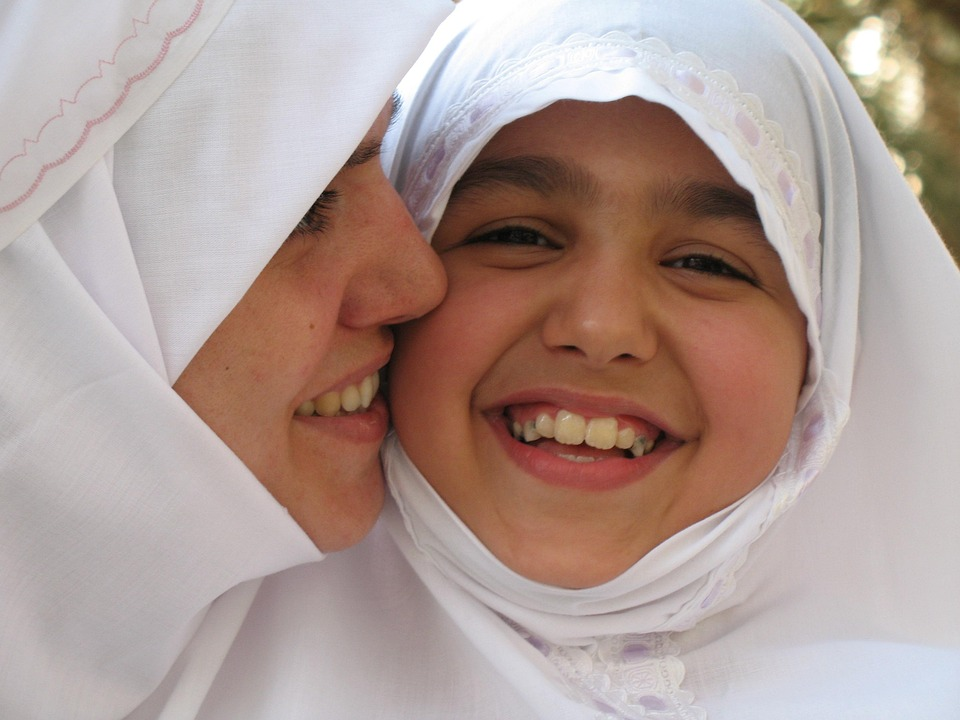
And, Family is the foundation and pillar of strength. As we are aware that father is the head of the family the role of the mother is equally important. Islam has a higher level of respect towards a “mother”. The mother has the greater responsibility and the greater reward in bringing up her children accordingly. There is a saying “no love can be matched to a mother’s love”. Quran states Their mothers bore them in hardship and delivered them in hardship. Their ˹period of˺ bearing and weaning is thirty months. In time, when the child reaches their prime at the age of forty, they pray, “My Lord! Inspire me to ˹always˺ be thankful for Your favours which You blessed me and my parents with, and to do good deeds that please You. And instil righteousness in my offspring. I truly repent to You, and I truly submit ˹to Your Will˺.” [46:15]. This ayah of the Quran explains us a great deal about the extents a mother goes to bring her children to the world and build a generation with risks but it’s all done with utmost love. Mothers are precious gifts to the world, they should be treated with love and kindness and obeyed at all circumstances. The following narration of the Prophet (peace be upon him) in an occasion states: “God has forbidden for you to be undutiful to your mothers” [Sahih Bukhari]. Hence, when a women becomes a mother she is an even more important figure in Islam. She is valued so much that Jannah lies under her feet. Prophet (peace be upon him) said “Paradise lies at the feet of your mother” [Tirmidhi].
Therefore, Women are so privileged and honored in Islam that a whole chapter in the Holy Quran is dedicated to them [Surah An Nisa, Chapter 4]. It is a blessing and pride to be born as women in Islam. The first martyr in Islam was a woman – Summaya (peace be upon her). The first who believed in Prophet Muhammad (peace be upon him) was a woman – Khadeeja (peace be upon her). Women have their own rights to education, independence, marriage, dignity and inheritance in Islam. A women carries the title of “Muslimah” with her all throughout her life and is authorized with many rights and protected. It is always to be reminded and remembered “Muslim Women are not oppressed”.
Featured Image
Please include a short bio
This description is written by a researcher and writer focusing on Islamic values, family ethics, and historical perspectives within the Muslim world. Their work highlights the dignity, rights, and spiritual significance granted to women in Islam across various stages of life.
Notes (If Any)
- Historical Context:
Before Islam, daughters faced severe mistreatment in many societies, including pre-Islamic Arabia. Islam radically transformed this by forbidding practices like female infanticide and teaching that daughters bring mercy and reward. - Equality in Spiritual Worth:
The Qur’an emphasizes that men and women are equal in spiritual responsibility and reward:
“Indeed, the most noble of you in the sight of Allah is the most righteous of you.” (Qur’an 49:13) - Rights of Women:
Islam granted women rights to inheritance, property ownership, financial independence, choice in marriage, and education at a time when such rights were rare elsewhere. - Role Flexibility:
While Islam highlights the honor of being a daughter, wife, and mother, these roles do not restrict a woman’s broader participation in society. Women in early Islam were scholars, businesswomen, leaders, educators, and contributors to public life. - Balance of Roles:
Islam encourages balance: fulfilling family responsibilities while also pursuing personal growth, spirituality, and community contributions. - Prophetic Example:
The Prophet Muhammad (PBUH) embodied gentle leadership in the treatment of women—praising his daughters, honoring his wives, and elevating the status of mothers through his teachings. - Complementary, Not Inferior:
Islam promotes complementarity between genders, not superiority. Each role has its distinct value, rights, and responsibilities.
Cultural vs. Religious Practices:
Some harmful practices against women in certain societies are cultural, not Islamic. Islam’s actual teachings emphasize mercy, honor, justice, and fairness toward women.
About The Author
